

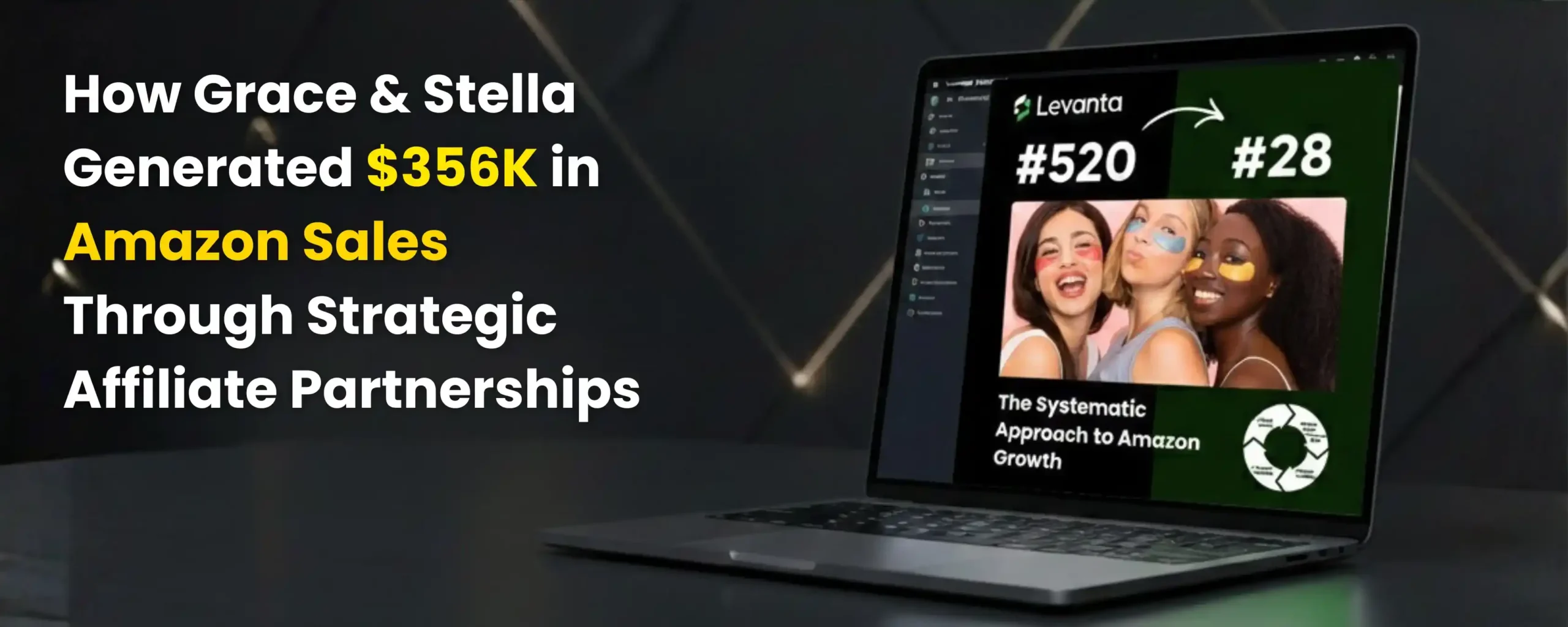
Most Amazon sellers treat affiliate marketing like a side project. Grace & Stella treated it like their primary growth channel.
The result? $356,000 in tracked affiliate sales within their first year of systematic partnership recruitment.
This wasn’t luck. It wasn’t a viral moment. It was a deliberate, methodical approach to building an affiliate program that transformed their Amazon presence—improving their Best Seller Rank, increasing organic visibility, and creating a sustainable revenue stream that compounds over time.
Here’s exactly how they did it, what worked, what didn’t, and how you can replicate their Amazon affiliate marketing strategy for your own business.
The Challenge: Breaking Through in a Saturated Beauty Market
Grace & Stella entered the Amazon beauty space with a significant disadvantage.
The beauty and personal care category on Amazon is brutally competitive. Thousands of brands compete for the same customers. Established players dominate search results. Customer acquisition costs through Amazon PPC were climbing month over month.
Their Specific Challenges as New Amazon Sellers
Zero brand recognition on Amazon (new seller account)
Limited advertising budget compared to established competitors
High customer acquisition costs through traditional PPC
Poor organic ranking for target keywords despite quality products
No existing affiliate relationships or influencer network
Most sellers in this position double down on Amazon PPC campaigns, hoping to outspend competitors. Grace & Stella took a different approach.
They asked: What if we could get other people to drive traffic to our listings instead of doing it all ourselves?
That question led them to build what would become one of the most successful Amazon affiliate programs in the beauty category.
The Strategic Shift: From Paid Ads to Strategic Affiliate Partnerships
Grace & Stella’s leadership made a critical decision: treat affiliate marketing as a primary channel, not a supplementary one.
The Strategic Shift: From Paid Ads to Strategic Affiliate Partnerships
This meant:
- Dedicating real budget to affiliate commissions (not just leftover marketing dollars)
- Hiring someone specifically to manage publisher relationships
- Building infrastructure for tracking and attribution
- Creating assets that made affiliates successful (product photography, copy templates, unique selling propositions)
The mindset shift: Instead of viewing affiliates as “people who might send us some sales,” they positioned partners as strategic distribution channels—similar to retail partnerships, but online.
This is where most Amazon sellers fail with affiliate marketing programs. They set up an affiliate program, send a few emails, and wonder why nothing happens. Grace & Stella committed to systematic recruitment and relationship management from day one.
The Systematic Approach: How They Built Their Amazon Affiliate Program
Phase 1: Foundation & Infrastructure (Weeks 1-4)
Before recruiting a single affiliate, Grace & Stella built the foundation.
1. Platform Selection for Amazon Attribution Tracking
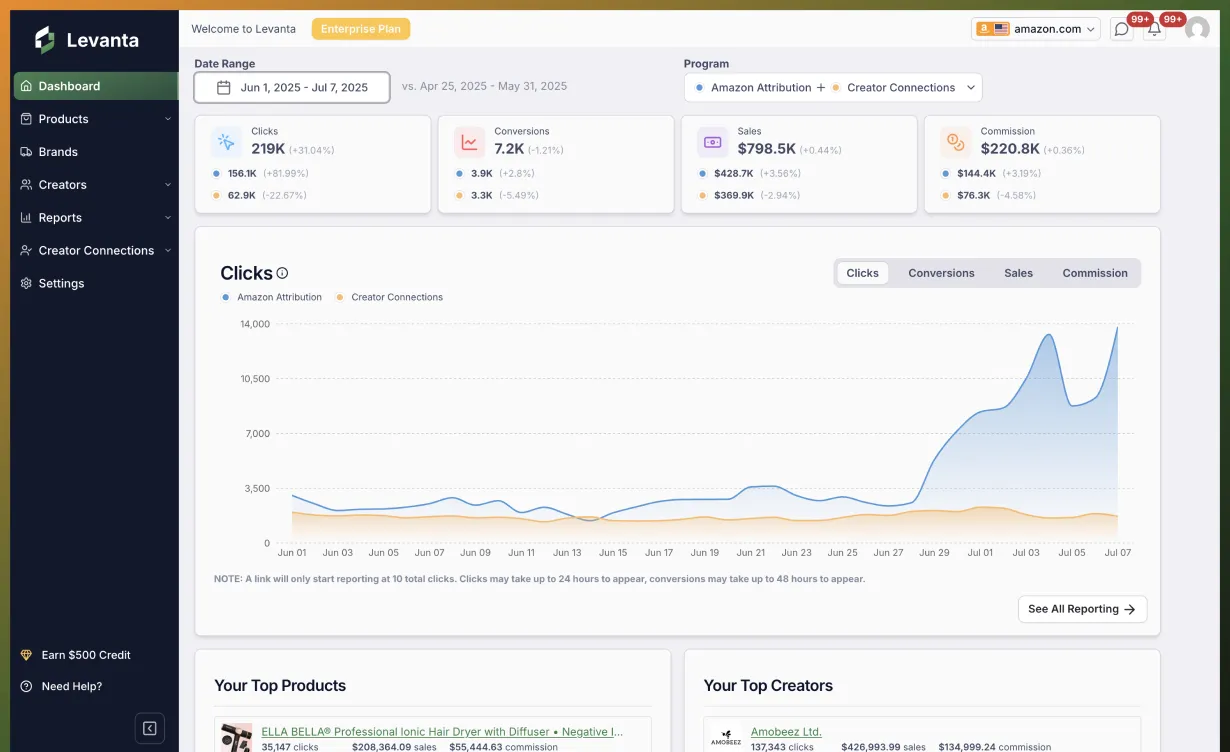
They chose Levanta as their affiliate management platform specifically because it’s built for Amazon sellers. Unlike generic affiliate networks, Levanta handles:
- Amazon attribution tracking (critical for knowing which affiliates drive sales)
- Automated commission payouts
- Publisher discovery tools
- Performance analytics specific to Amazon metrics
Why this mattered: Clean attribution data meant they could identify which partnerships actually worked, then scale those relationships aggressively.
2. Commission Structure Design for Amazon Affiliates
Their initial commission structure:
- 10% base commission on all sales
- 15% commission for affiliates driving 50+ sales per month
- 20% commission for top-tier publishers (100+ monthly sales)
- 30-day cookie window (standard for Amazon attribution)
This tiered approach incentivized affiliates to scale their promotion efforts rather than just sending one-time traffic.
3. Affiliate Marketing Asset Creation
Grace & Stella created a complete affiliate toolkit:
- High-resolution product images (lifestyle and white background)
- Product descriptions with benefit-focused copy
- Unique discount codes for tracking secondary attribution
- Email templates affiliates could customize
- Social media graphics sized for Instagram, Pinterest, and Facebook
- Comparison charts showing their products vs. competitors
Most sellers skip this step. They expect affiliates to create everything from scratch. Grace & Stella made success easy.
Phase 2: Strategic Affiliate Recruitment (Weeks 5-12)
With infrastructure in place, they began systematic outreach.
Target Partner Profile for Beauty Affiliate Marketing
They didn’t recruit randomly. They identified specific publisher types:
- Beauty bloggers with 10,000-100,000 monthly visitors (sweet spot for conversion)
- Skincare-focused YouTube creators with engaged audiences
- Pinterest influencers in the beauty and self-care niches
- Email newsletter publishers focused on women’s lifestyle content
Notice what they didn’t target: massive influencers with millions of followers. Those partnerships are expensive and often deliver poor ROI for Amazon products.
Affiliate Outreach Strategy That Converts
Grace & Stella’s recruitment emails followed a proven template:
- Personalized opening (referenced specific content from the publisher)
- Value proposition (what’s in it for the affiliate)
- Social proof (other successful partners, if available)
- Clear commission structure (transparency builds trust)
- Easy next step (one-click application link)
Sample Affiliate Recruitment Email Structure
“Hi [Name], I loved your recent article about [specific topic]. We work with Grace & Stella, and I think our [product] would resonate with your audience because [specific reason]. We offer 10-15% commissions on all sales with full creative support. Would you be open to a partnership?”
They sent 200 personalized outreach emails in the first month. Response rate: 18%. Acceptance rate among responders: 67%.
Key insight: Personalization beat volume. Fifty high-quality, personalized emails outperformed 500 generic template emails every time.
Phase 3: Affiliate Activation & Support (Weeks 13-20)
Getting affiliates to sign up is one thing. Getting them to actually promote is another.
Onboarding Process for Amazon Affiliates
Every new affiliate received:
- Welcome email with program overview
- Access to creative assets (images, copy, templates)
- Unique tracking link and discount code
- Suggested content angles (not scripts—ideas they could adapt)
- Direct contact information for partnership manager
Ongoing Affiliate Support Strategy
- Bi-weekly performance emails showing each affiliate’s stats
- Monthly top performer highlights (gamification that drove competition)
- Seasonal campaign ideas (holiday promotions, summer skincare, etc.)
- New product launch previews (affiliates got first access to promote new items)
Affiliate Reactivation Campaigns
For partners who signed up but never promoted, Grace & Stella ran a “second chance” campaign:
- “We noticed you haven’t shared your link yet—any questions?”
- Offered additional support or custom assets
- 40% of inactive affiliates became active after this outreach
Most affiliate programs ignore inactive partners. Grace & Stella treated them as opportunities.
Phase 4: Optimization & Scaling (Months 6-12)
Once they had data, they optimized aggressively.
Performance Analysis: The 80/20 Rule in Affiliate Marketing
They discovered the 80/20 rule applied to affiliate partnerships:
- Top 20% of affiliates drove 78% of total sales
- Mid-tier 30% contributed 18% of sales
- Bottom 50% generated only 4% of sales
Strategic Response to Affiliate Performance Data
- Double down on top performers – Increased commissions to 20%, offered exclusive product access, created custom landing pages
- Develop mid-tier partners – Provided additional training, content ideas, and promotional support
- Automated bottom tier – Kept them in the program (no harm), but stopped manual outreach
Content Partnerships for Amazon Affiliate Success
Their most successful partnership type? Publisher editorial features.
Beauty bloggers who wrote detailed product reviews drove:
- 3.5x higher conversion rates than social media posts
- 2.8x higher average order values
- 4x longer customer lifetime value (repeat purchases)
Why reviews worked: They provided educational content that answered customer questions, positioned Grace & Stella products as solutions to specific problems, and built trust through third-party validation.
Exclusive Partnership Agreements with Top Affiliates
Grace & Stella identified their top 10 review-driving publishers and created exclusive partnership agreements:
- Guaranteed monthly payments (not just commission)
- First access to new products
- Co-created content (interviews with founders, behind-the-scenes)
- Dedicated account management
This transformed transactional relationships into strategic partnerships.
The Results: $356K in Amazon Affiliate Sales Breakdown
Direct Revenue Impact from Affiliate Marketing
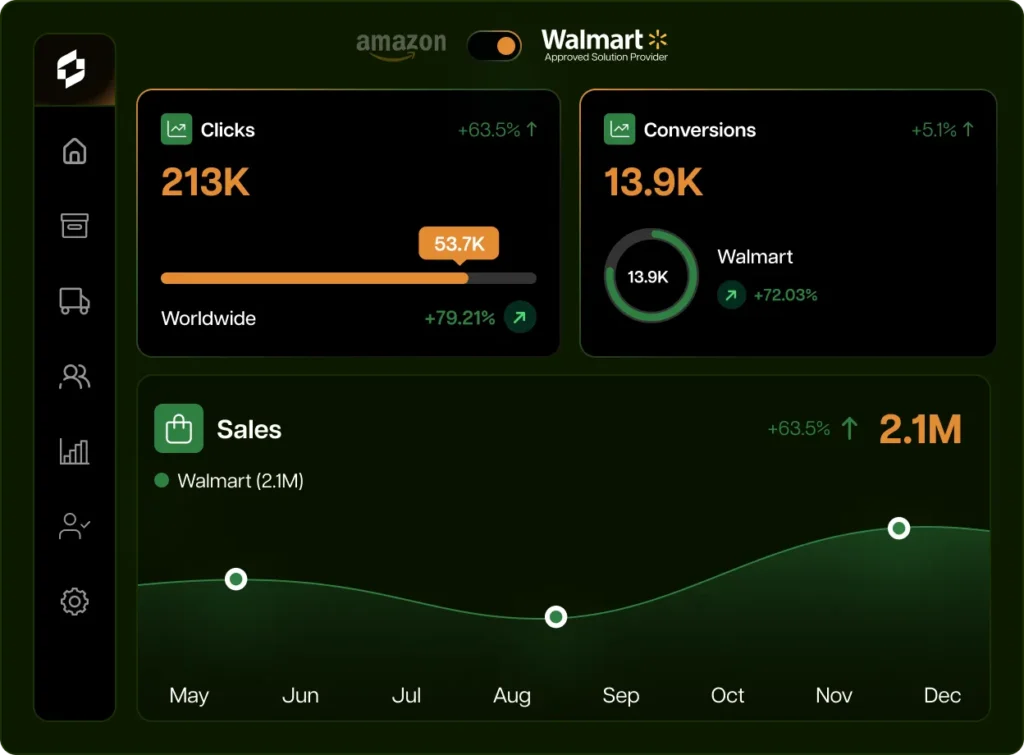
- $356,881 in tracked affiliate sales (first 12 months)
- Average order value: $47 (higher than their PPC-driven sales at $38)
- Customer acquisition cost: $8-12 (vs. $25-35 through Amazon PPC)
- ROI: 4.7:1 (for every dollar spent on affiliate commissions and management, they generated $4.70 in profit)
Indirect Benefits of Amazon Affiliate Programs
This is where affiliate marketing’s true value emerges for Amazon sellers
Improved Best Seller Rank (BSR) Through Affiliate Sales
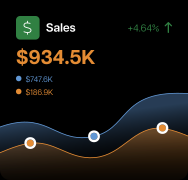
Consistent affiliate-driven sales velocity improved their BSR across multiple product categories:
- Main product moved from #8,500 to #450 in Beauty & Personal Care
- Subcategory rankings improved by 60-80% across entire catalog
Better BSR = higher organic visibility = more non-affiliate sales. The compounding effect meant their affiliate program drove both direct and indirect revenue growth.
Enhanced Organic Ranking on Amazon
Affiliate sales counted as regular sales in Amazon’s algorithm. This meant:
- Improved keyword rankings (moved from page 3-4 to page 1 for target keywords)
- Increased organic traffic (35% growth in sessions from organic search)
- Better conversion rates (social proof from affiliate reviews improved listing conversion)
Content Creation at Scale Through Affiliates
Their 50+ active affiliates created:
- 120+ blog posts featuring Grace & Stella products
- 85+ YouTube videos (product reviews, tutorials, unboxings)
- 200+ Instagram posts and stories
- 45+ Pinterest pins with product links
This content continues driving traffic months and years after publication. Unlike paid ads that stop when budget runs out, content marketing compounds over time.
Customer Insights from Affiliate Feedback
Affiliate feedback provided valuable product development insights:
- Which product benefits resonated most with customers
- Common objections or questions that needed addressing
- Complementary products customers wanted (led to line extensions)
- Packaging and presentation improvements
Grace & Stella used this feedback to improve listings, create better imagery, and develop new products their audience actually wanted.
The Specific Tactics That Drove Amazon Affiliate Sales
Let’s break down the tactical execution that made this work.
Publisher-Specific Landing Pages
For their top-performing affiliates, Grace & Stella created custom Amazon Storefronts that:
- Featured the products that specific publisher’s audience bought most
- Included custom messaging aligned with that publisher’s content
- Tracked performance independently (so they knew which partnerships worked)
Result: 28% higher conversion rates on custom pages vs. general product listings.
Seasonal Campaign Coordination
Rather than letting affiliates promote randomly, Grace & Stella orchestrated campaigns:
- Valentine’s Day: “Self-care gift guide” campaign (15 affiliates participated)
- Mother’s Day: “Gifts for mom” bundles (22 affiliates participated)
- Black Friday: Coordinated discount code launch (35 affiliates participated)
Coordinated campaigns created sales spikes that improved BSR and triggered Amazon’s recommendation algorithms.
Exclusive Product Access for Affiliates
Top affiliates got early access to new products:
- Received samples 4-6 weeks before public launch
- Could create reviews and tutorials before product went live
- Had content ready to publish on launch day
Launch day impact: New products launched with 8-15 reviews already published by trusted affiliates, dramatically improving conversion rates from day one.
Affiliate-Exclusive Product Bundles
Grace & Stella created product bundles available only through affiliate links:
- Higher perceived value (bundle discount)
- Higher average order value ($62 vs. $47 for single products)
- Differentiated offer (couldn’t be found through regular Amazon search)
Affiliates promoted bundles because they were unique and drove higher commissions.
Attribution Backup System for Amazon
Amazon attribution isn’t perfect. Grace & Stella implemented backup tracking:
- Unique discount codes for each affiliate (secondary attribution)
- UTM parameters in affiliate links (traffic source tracking)
- Post-purchase surveys asking “How did you hear about us?”
When attribution data conflicted, they gave affiliates benefit of the doubt—which built trust and loyalty.

Key Lessons for Amazon Sellers Building Affiliate Programs
What can you learn from Grace & Stella’s approach?
Lesson 1: Systematic Affiliate Marketing Beats Random Efforts
They didn’t hope affiliates would find them. They:
- Built infrastructure first
- Recruited strategically
- Activated deliberately
- Optimized continuously
Most sellers do the opposite—they launch an affiliate program and hope it works. Grace & Stella treated it like a business channel deserving strategic investment.
Lesson 2: Top 20% of Affiliates Deserve 80% of Attention
Once they identified their highest-performing affiliates, they:
- Increased commissions
- Provided exclusive access
- Created custom assets
- Offered guaranteed payments
The ROI on deepening relationships with proven partners far exceeded finding new mediocre ones.
Lesson 3: Make Affiliate Success Easy
Affiliates promoted Grace & Stella because it was easy:
- Pre-written copy templates
- Professional images ready to use
- Clear commission structure
- Fast, reliable payouts
- Responsive partnership management
Reduce friction = increase promotion frequency.
Lesson 4: Affiliate Sales Drive Organic Growth on Amazon
The compounding effect is real:
- Affiliate drives sale
- Sale improves BSR
- Better BSR increases organic visibility
- More organic sales improve keyword rankings
- Better rankings drive more organic traffic
- Higher traffic increases conversion rates
- The cycle accelerates
Affiliate marketing isn’t just a revenue channel—it’s a growth multiplier for your entire Amazon business.
Lesson 5: Content Partnerships Over One-Time Promotions
Grace & Stella prioritized:
- Detailed product reviews (not just social media shoutouts)
- Tutorial content (how to use products)
- Comparison content (vs. competitor products)
Why? This content continues driving traffic indefinitely. A well-written review from 2022 still generates sales in 2025.
Lesson 6: Infrastructure Enables Affiliate Program Scale
Using Levanta’s affiliate management platform meant they could:
- Scale to 50+ affiliates without manual tracking chaos
- Pay commissions automatically (saved 10+ hours monthly)
- Identify top performers instantly (data-driven decisions)
- Recruit new partners continuously (built-in discovery tools)
Technology enabled them to manage complexity that would otherwise require a full-time team.
How to Replicate Grace & Stella's Amazon Affiliate Success
You don’t need a beauty brand or a massive budget to implement this approach. Here’s your roadmap:
Step 1: Build Your Affiliate Program Foundation (Week 1-2)
Set Up Infrastructure for Amazon Affiliate Marketing
- Choose an Amazon affiliate management platform (Levanta recommended for Amazon sellers)
- Design your commission structure (start with 10-15% base commission)
- Create affiliate assets (images, copy, product benefits)
Time investment: 8-12 hours
Resource: Use my 30-Day Affiliate Program Checklist for complete setup guidance.
Step 2: Identify Your Target Affiliate Partners (Week 2-3)
Research Publishers in Your Niche
- Use Google search: “[your product category] blog”
- Browse Pinterest for influencers in your space
- Search YouTube for review channels
- Check Instagram hashtags related to your products
Create an Affiliate Prospect Tracking System
Create a spreadsheet tracking:
- Publisher name and URL
- Audience size (traffic/followers)
- Content quality (do they create reviews? tutorials?)
- Contact information
- Outreach status
Target: Identify 100-200 potential partners.
Time investment: 6-10 hours
Step 3: Launch Systematic Affiliate Outreach (Week 3-8)
Send Personalized Recruitment Emails
- 10-20 emails per day
- Personalize each one (reference their content specifically)
- Clear value proposition
- Easy application process
Expected Affiliate Recruitment Results
- 15-20% response rate
- 50-70% acceptance rate among responders
- Goal: 20-30 active affiliates in first 2 months
Time investment: 5-7 hours weekly
Resource: Get my Affiliate Partner Recruitment Script & Templates with proven email templates.
Step 4: Activate Your Amazon Affiliates (Week 9-12)
Before recruiting a single affiliate, Grace & Stella built the foundation.
Onboard Affiliates Properly
- Welcome email with program details
- Provide all creative assets
- Suggest content angles
- Set clear expectations
Support Ongoing Affiliate Promotion
- Bi-weekly performance updates
- Monthly campaign ideas
- Respond to questions within 24 hours
Time investment: 3-5 hours weekly
Grace & Stella created a complete affiliate toolkit:
- High-resolution product images (lifestyle and white background)
- Product descriptions with benefit-focused copy
- Unique discount codes for tracking secondary attribution
- Email templates affiliates could customize
- Social media graphics sized for Instagram, Pinterest, and Facebook
- Comparison charts showing their products vs. competitors
Most sellers skip this step. They expect affiliates to create everything from scratch. Grace & Stella made success easy.
Step 5: Optimize Based on Affiliate Performance Data (Month 4+)
Analyze Affiliate Marketing Performance
- Identify top 20% of performers
- Increase commissions for top affiliates
- Create exclusive partnerships
- Pause outreach to low-performing segments
Scale What Works in Your Affiliate Program
- Recruit more affiliates similar to your top performers
- Create more assets for successful content types
- Develop strategic partnerships with proven publishers
Time investment: 2-3 hours weekly (ongoing)
The Long-Term Compounding Effect of Amazon Affiliate Marketing
Grace & Stella’s $356K in year-one affiliate sales was impressive. But the real story is what happened in years two and three.
Multi-Year Affiliate Sales Growth
- Year 2: $680,000 in affiliate sales (91% growth)
- Year 3: $1.2M in affiliate sales (76% growth)
Why Affiliate Marketing Accelerates Over Time
- Existing content continued driving traffic (compounding content effect)
- Top affiliates promoted more aggressively (relationship deepening)
- New products launched with built-in affiliate distribution (infrastructure leverage)
- Brand awareness increased (making recruitment easier)
Affiliate marketing is the only Amazon growth channel that compounds over time.
Paid ads stop when you stop paying. Affiliate content keeps working indefinitely.
Your Next Steps to Build an Amazon Affiliate Program
H3: Download Free Amazon Affiliate Marketing Resources
- Download the free resources:
- Build your foundation:
- Use my 30-Day Affiliate Program Checklist to set up infrastructure
- Start recruiting:
- Use my Affiliate Recruitment Templates to launch outreach
- Track and optimize:
- Use clean attribution data to identify what works
- Double down on successful partnerships
- Scale systematically
The Opportunity for Amazon Sellers is Real
The opportunity is real. Most Amazon sellers still aren’t doing this.
Grace & Stella proved that systematic affiliate programs can generate hundreds of thousands in sales, improve organic rankings, and create sustainable competitive advantages.
The question isn’t whether affiliate marketing works for Amazon sellers. It does.
The question is: Will you build your program systematically or hope for random results?
Free Resources for Building Your Affiliate Program
How to Recruit Amazon Affiliates
A comprehensive guide covering:
- Strategic partner categories and where to find them
- Outreach tactics that actually get responses
- Relationship nurturing frameworks
- Activation and retention strategies
Affiliate Marketing for Amazon Sellers: The Definitive Guide
Everything you need to know about:
- Setting up affiliate programs that work
- Commission structure design
- Finding and recruiting partners at scale
- Avoiding the mistakes most sellers make
I’ve spent four years building E-Com Cabin around one principle: transformation beats optimization.
Systematic affiliate programs are one of the highest-leverage transformations available to Amazon sellers—and one of the most neglected. This piece is here to change that.
If you’re ready to build your affiliate program strategically, the resources above will show you how.