


The Opportunity Nobody's Quantifying
Over the last four years, I’ve watched a pattern emerge in how Amazon sellers think about growth.
They optimize their paid advertising. They refine their product content. They run PPC campaigns. They test creative. They chase conversion rate improvements measured in decimal points.
And they leave their affiliate channel completely undeveloped.
Here’s what the data says: 80% of D2C brands are leveraging affiliate marketing as a primary growth mechanism. Not a secondary channel. Not an afterthought. A *primary* growth mechanism.
Yet when I talk to most Amazon sellers—even the ones doing $1-5M annually—fewer than 20% have any systematic approach to affiliate recruitment, management, or activation.
That gap is where transformation lives.
What Systematic Affiliate Programs Actually Look Like
Let me walk you through three real examples of what happens when brands move from “we have an affiliate program” to “we run an affiliate program strategically.”

The Beauty Brand That Improved Ranking 18x in 90 Days
Grace & Stella makes premium vegan, cruelty-free skincare. Before 2023, they had scattered affiliate efforts and inconsistent results.
When they partnered with an affiliate agency (Versa Marketing) and moved onto a structured platform (Levanta), everything changed.
In 90 days:
- They added 150 new affiliate partners
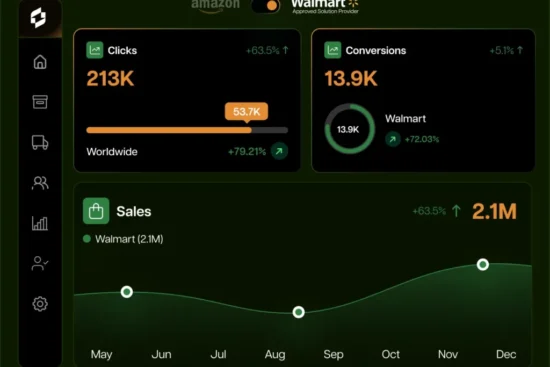
- Generated $356K in affiliate-driven sales
- Improved their Amazon best-seller rank from position 520 to position 28 in their category
Why did the ranking improve so dramatically? Because affiliate traffic signals velocity to Amazon’s algorithm. Sales volume, external traffic, and conversion patterns all factor into bestseller ranking. When you add 150 qualified affiliates driving consistent traffic, Amazon notices.
The second-order effect: Improved ranking = improved organic visibility = lower cost per acquisition across all channels.
They weren’t optimizing. They were *transforming*.

The Performance Brand That Hit $500K in 90 Days
The result: Over half a million dollars in affiliate-driven revenue in their first quarter, averaging $100K+ per month within 30 days of launch.
How? Through systematic partner recruitment:
- Targeted high-impact affiliates: Not everyone. Performance publishers, niche fitness content sites, athletic influencers, media partnerships. Quality over quantity.
- Structured commission design: Tiered commissions that attracted top-tier partners while maintaining profitability. Competitive enough to win their attention, structured enough to stay profitable.
- Exclusive activations: Premium placements with top 20% of affiliates—gift guides, newsletter features, content integrations. Immediate visibility and conversions.
- Real-time optimization: Daily monitoring of what’s converting. Reallocating budgets to top performers within weeks, not quarters.
The key insight: They treated affiliate scaling like a growth function, not an administrative task.

The Digital Agency That Pivoted and Grew 550% in 4 Weeks
Front Row is a digital marketing agency managing multiple brand portfolios. They had healthy 6-figure monthly affiliate revenue.
Then Amazon changed its attribution policies in late 2024. Their biggest partners paused campaigns. Revenue stopped.
Most agencies would’ve retreated to PPC.
Front Row pivoted instead. They moved their top 20% of performing affiliates to a new attribution method (Levanta’s Creator Connections integration), rebuilt campaigns, and added new partners through the same platform.
Result: 550% revenue growth in 4 weeks.
This isn’t about a new platform. It’s about speed of execution. They tested with proven partners first, measured results immediately, adapted within days. No quarterly reviews. No waiting for perfect strategy. Just rapid iteration on data.
The Framework Behind Systematic Affiliate Growth
If you’re reading this and thinking “This is great for big brands, but what about my business?”, I want to be direct: The principles are identical at every scale. The difference between a struggling affiliate program and a high-performing one isn’t budget or size. It’s structure.
Here’s what works:

Strategic Partner Recruitment
Most sellers reach out to 100 random influencers and wonder why 95 don’t respond. High-performing programs build targeted lists based on specific criteria:
Read More About
- Content creators: YouTube reviewers, TikTok creators, podcasters in your niche
- Media publications: Industry blogs, lifestyle magazines, educational sites
- Niche communities: Subreddits, specialized forums, enthusiast communities
- Performance marketers: Media buyers, content aggregators, deal sites
- Strategic partners: Complementary brands, loyalty programs, subscription boxes
You don’t need all of these. You need the right ones for your category.
A hair care brand targets beauty influencers and wellness publications. A performance recovery brand targets fitness creators and athletic media. A kitchen gadget brand targets food bloggers and product review sites.
The recruitment isn’t random. It’s systematic.

Commission Structure Design
Here’s something most sellers get wrong: Affiliate commissions aren’t “what Amazon gives us.” They’re a negotiable partnership agreement.
Read More About
High-performing programs customize commission structures based on partner type:
- Media publications: Flat percentage (3-7%) for consistent, high-volume traffic
- Content creators: Performance-based tiers (2% → 5% based on conversion rate)
- Strategic partners: Hybrid models (base percentage + bonus for hitting targets)
- Top performers: Loyalty bonuses, exclusive products, co-marketing support
The goal: Structure commissions so that top-performing partners feel rewarded, mediocre partners feel motivated to improve, and your margins stay intact.
Front Row did this. Hyperice did this. Grace & Stella did this.
Most sellers just set it to “standard affiliate rate” and wonder why they get standard results.

Activation & Relationship Management
Getting a partner to sign up is 20% of the work. Getting them to actively promote your product is 80%. High-performing programs have playbooks for activation:
Read More About
- Onboarding sequence: Clear documentation of your products, differentiators, discount codes, promotional assets
- Exclusive offers: Early access to new products, higher commissions for limited-time campaigns, co-branded content opportunities
- Regular check-ins: Monthly reviews of performance, feedback loops, optimization conversations
- Top-performer incentives: Loyalty bonuses, feature opportunities, revenue sharing for exceptional performance
This is how Ella Bella went from struggling to scale an affiliate program to managing hundreds of partners smoothly. Automated tracking meant they could actually manage relationships instead of drowning in spreadsheets.
Real-Time Performance Tracking
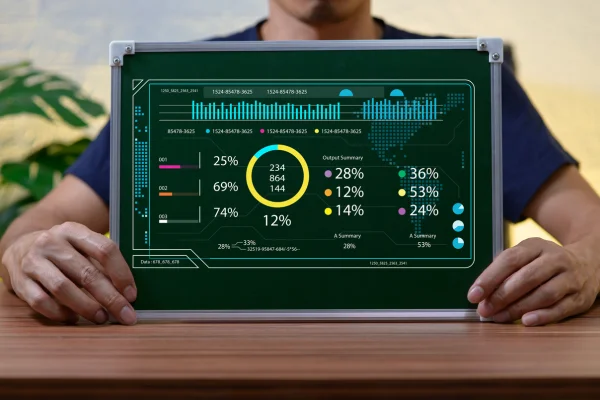
You can’t improve what you can’t measure. Traditional affiliate tracking has been messy: Manual spreadsheets, delayed reporting, disputed numbers, unclear ROI.
Read More About
Modern platforms (like Levanta) changed that. Affiliates can see their real-time performance. Brands can track every click to conversion to commission automatically. Payouts happen without manual processing.
The operational clarity matters more than the technology. Because with clear data, you can:
- Identify top 20% of performers in weeks, not quarters
- Reallocate marketing budget to what’s working
- Build relationships with high-value partners
- Spot underperformers and either improve them or replace them
- Design commission structures based on actual ROI
Why Most Sellers Fail at Affiliate Programs (And How to Avoid It)
Mistake 1: Treating Affiliate as a Side Project
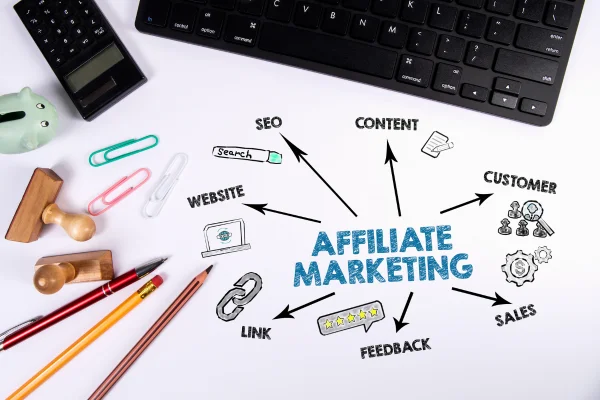
Most sellers assign affiliate management to whoever has spare bandwidth. A junior marketer. A part-time contractor. Someone handling it alongside three other responsibilities.
Systematic affiliate programs require ownership. A dedicated person (or small team) architecting strategy, recruiting partners, managing relationships, analyzing data, and optimizing continuously.
This doesn’t mean hiring full-time at every scale. It means: assigned responsibility, measured outcomes, regular optimization.

Mistake 2: Setting Commissions and Forgetting Them
Once you publish your commission rate, most sellers assume they’re done.
High-performing programs experiment constantly:
- Test higher commissions for 30 days with new partners
- Create seasonal promotions with performance bonuses
– Build loyalty bonuses for consistent top performers - Design tiered structures that reward growth
The goal is always the same: Maximize partner engagement while staying profitable.
Hyperice did this. They maintained under 1% net commission rate (after Amazon brand referral bonus) while generating $500K+ in their first quarter. That’s not by accident. That’s by design.

Mistake 3: Ignoring Attribution and Partner Accountability
Without clean attribution, you can’t tell which partners are actually driving ROI.
Some affiliates drive high volume but poor conversion. Some drive high-quality sales but low volume. Some are truly revenue-active. Some are just noise.
Modern platforms solve this by integrating directly with Amazon’s brand referral tracking. Every click is attributed. Every conversion is trackable. Commissions are calculated automatically.
This infrastructure shift matters more than you’d think. Because with clear data, you can have honest conversations with partners: “Here’s your conversion rate. Here’s what we need to improve. Here’s what we’re willing to pay for that improvement.”
Without it, you’re just guessing.

The Case for Systematic Affiliate Programs Right Now
If you’re managing an Amazon brand (or multiple brands), here’s why this matters in 2025:
- First: Paid advertising is increasingly expensive and competitive. Affiliate channels offer a more capital-efficient way to drive sales volume.
- Second: Sales velocity impacts organic ranking, which impacts visibility, which impacts lifetime customer value. Affiliate traffic is velocity. Velocity drives ranking.
- Third: Affiliate partners become long-term distribution channels. One creator or publication can drive consistent traffic for years. That’s a strategic asset, not a transaction.
- Fourth: Most of your competitors still aren’t doing this systematically. That’s a competitive advantage window that won’t stay open forever.
The brands moving fastest right now aren’t the ones optimizing PPC bidding strategies. They’re the ones building new revenue channels.
Your Next Step
If your affiliate program is underdeveloped, the place to start is straightforward:
Step 1: Audit your current situation
- Who are your current affiliates?
- How much revenue are they driving?
- What’s your commission structure?
- How are you tracking performance?
Step 2: Identify your target partner categories
- Which types of creators, publishers, or partners align with your audience?
- Where does your customer naturally discover products in your category?
Step 3: Build a systematic recruitment playbook
- Targeted outreach sequences
- Customized pitch angles for different partner types
- Commission offers designed to attract the right partners
Step 4: Move to infrastructure that scales
- Automated tracking and attribution
- Streamlined commission calculations and payouts
- Real-time performance visibility for you and your partners
I put together detailed resources on affiliate recruitment strategy, partner activation, and common mistakes to avoid. Everything you need to build this systematically is there.
The question isn’t whether affiliate marketing works. The case studies prove it does.
The question is: Are you going to architect it strategically, or leave it to chance?
Free Resources for Building Your Affiliate Program

How to Recruit Amazon Affiliates
A comprehensive guide covering:
- Strategic partner categories and where to find them
- Outreach tactics that actually get responses
- Relationship nurturing frameworks
- Activation and retention strategies
Affiliate Marketing for Amazon Sellers: The Definitive Guide
Everything you need to know about:
- Setting up affiliate programs that work
- Commission structure design
- Finding and recruiting partners at scale
- Avoiding the mistakes most sellers make
I’ve spent four years building E-Com Cabin around one principle: transformation beats optimization.
Systematic affiliate programs are one of the highest-leverage transformations available to Amazon sellers—and one of the most neglected. This piece is here to change that.
If you’re ready to build your affiliate program strategically, the resources above will show you how.